
Centralised Asset Management
Turning scattered illustration assets into a single source of truth
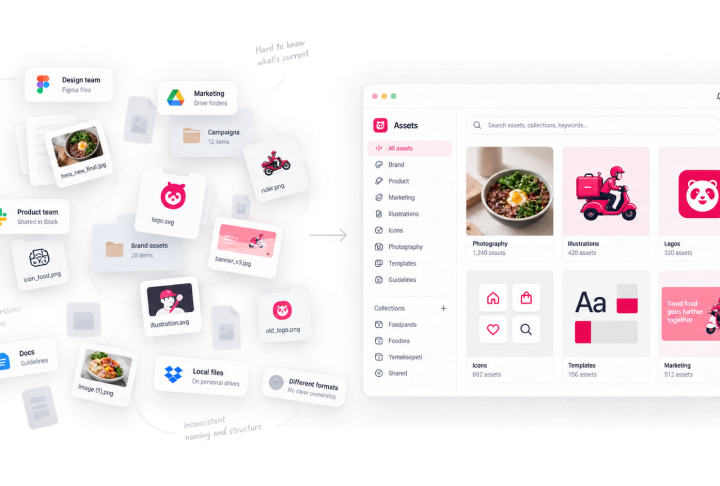
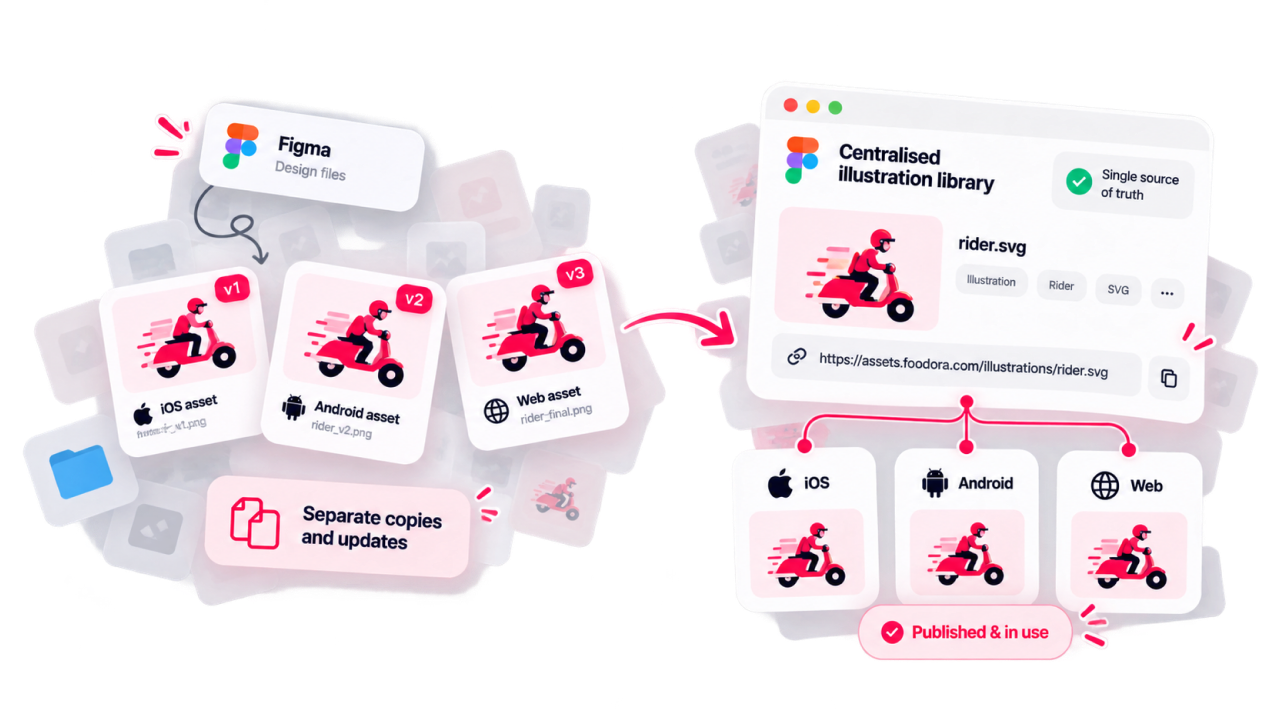
Illustrations were embedded separately across iOS, Android and Web, making them difficult to maintain consistently across brands and platforms.
The goal was to centralise how those assets were managed — making updates easier, reducing duplication and removing unnecessary assets from the apps themselves.
The same assets existed in too many places
Illustrations were stored directly within individual platforms and maintained separately across different brands.
The same or similar illustration could exist under different names, at different sizes, or in different versions depending on where it was being used. Updating one asset meant first understanding where it existed, which version was current and which products were using it.
The fragmentation also meant illustration assets were bundled directly into the applications, contributing unnecessary weight to the apps.
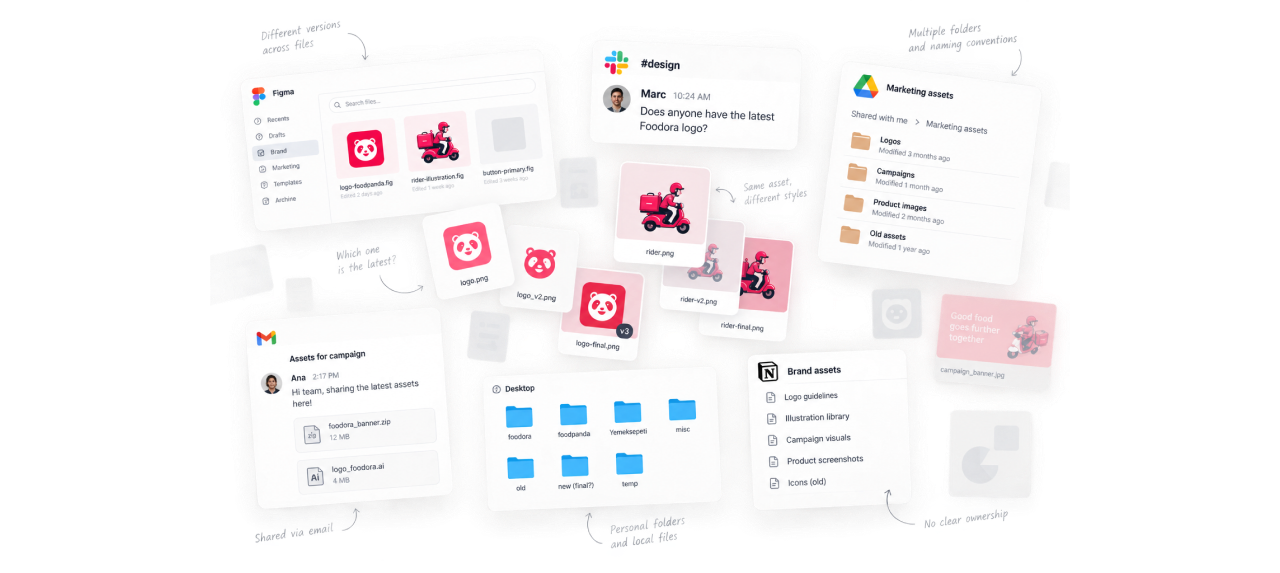
Before centralising anything, we needed an inventory
We started by mapping the illustration libraries across Foodora, Foodpanda and Yemeksepeti.
The exercise wasn’t simply about counting files. We needed to understand which illustrations were still being used, which represented the same asset under different names, and which could be retired.
That inventory became the foundation for the migration.
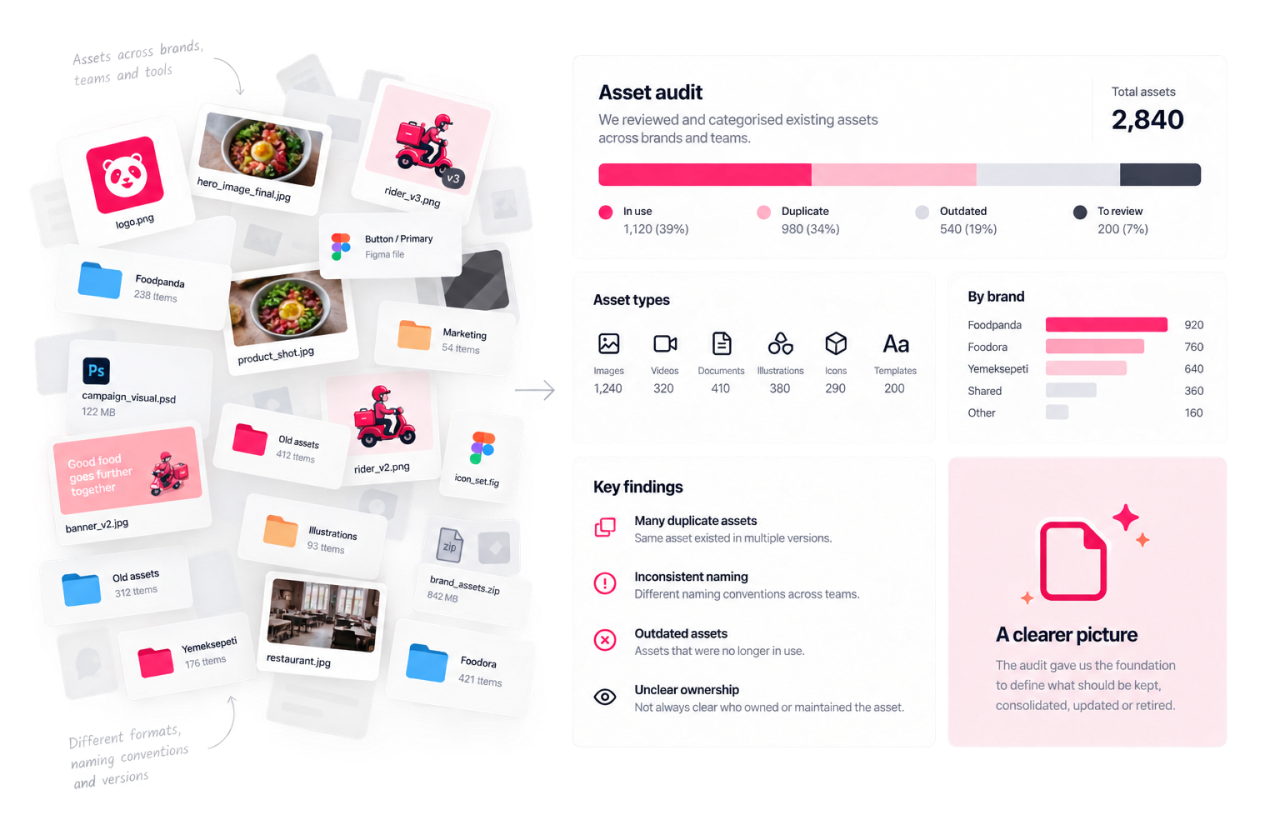
Making the library understandable before making it central
Knowing an illustration existed didn’t necessarily mean people could find the information they needed about it.
At the time, direct access through Bento covered roughly 47% of the assets, while access to detailed asset information was around 45%.
We created an illustration catalogue as the bridge between existing platform assets and the future central library — helping map equivalent assets between brands and platforms and supporting the move into a shared Figma library.
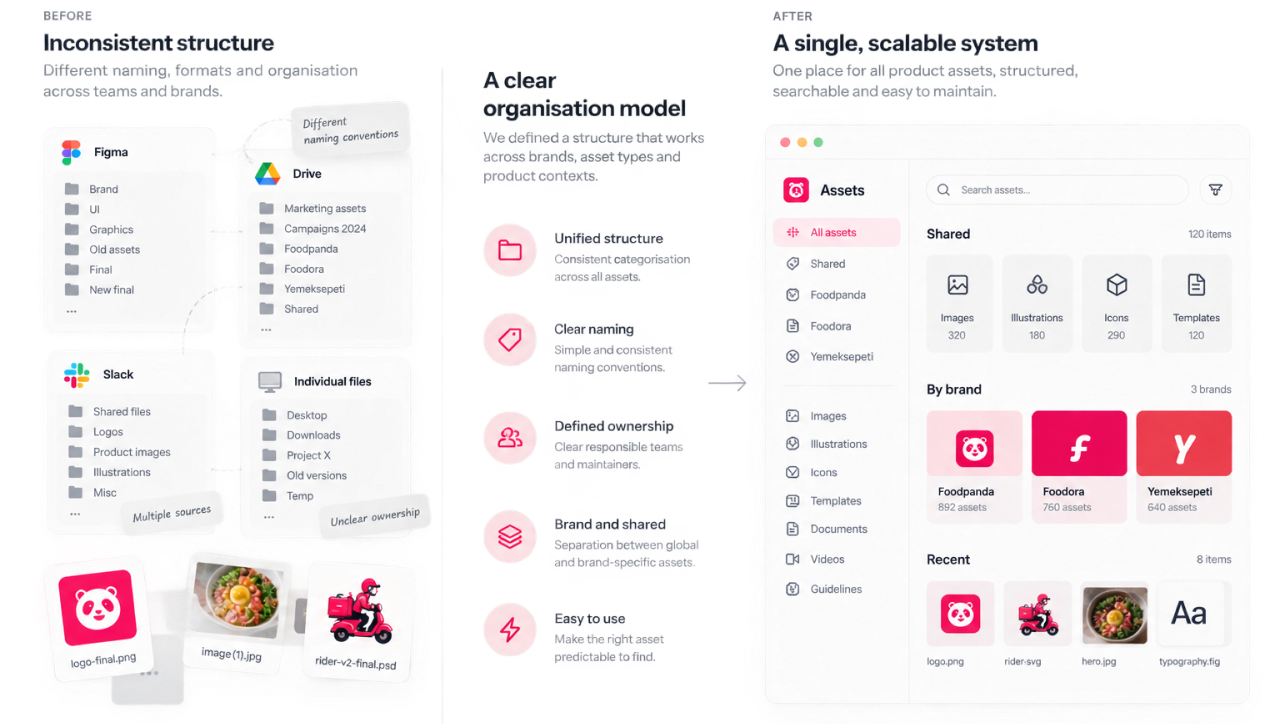
From embedded assets to remotely managed illustrations
The larger change was moving away from illustrations being packaged independently inside each application.
Figma became the design source of truth, while the Delivery Hero Image Service (DHIS) became the delivery layer. Instead of engineers maintaining separate copies inside iOS, Android and Web, illustrations could be published once and referenced through unique URLs.
This separated the asset itself from the application consuming it.
Moving without breaking existing product experiences
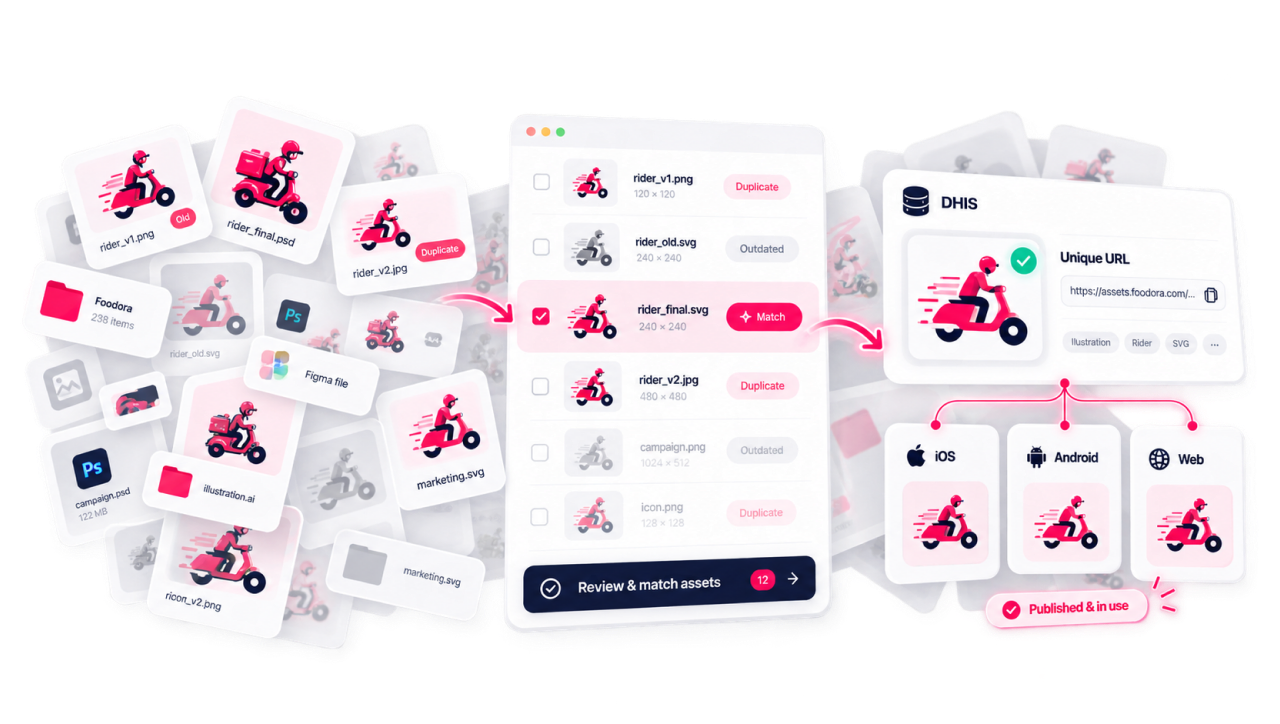
Centralisation couldn’t happen as a single replacement. Existing illustrations were already being used throughout the products, so the migration needed a clear relationship between what existed in the applications and what would live in the central library.
The inventory and catalogue provided that mapping. Assets could be reviewed, matched to their central equivalent, checked for outdated or duplicate versions, published through DHIS and migrated progressively rather than replacing everything at once.
Centralisation needed a process, not just a library
Moving the files solved only part of the problem. The longer-term challenge was making sure the library didn’t become fragmented again.
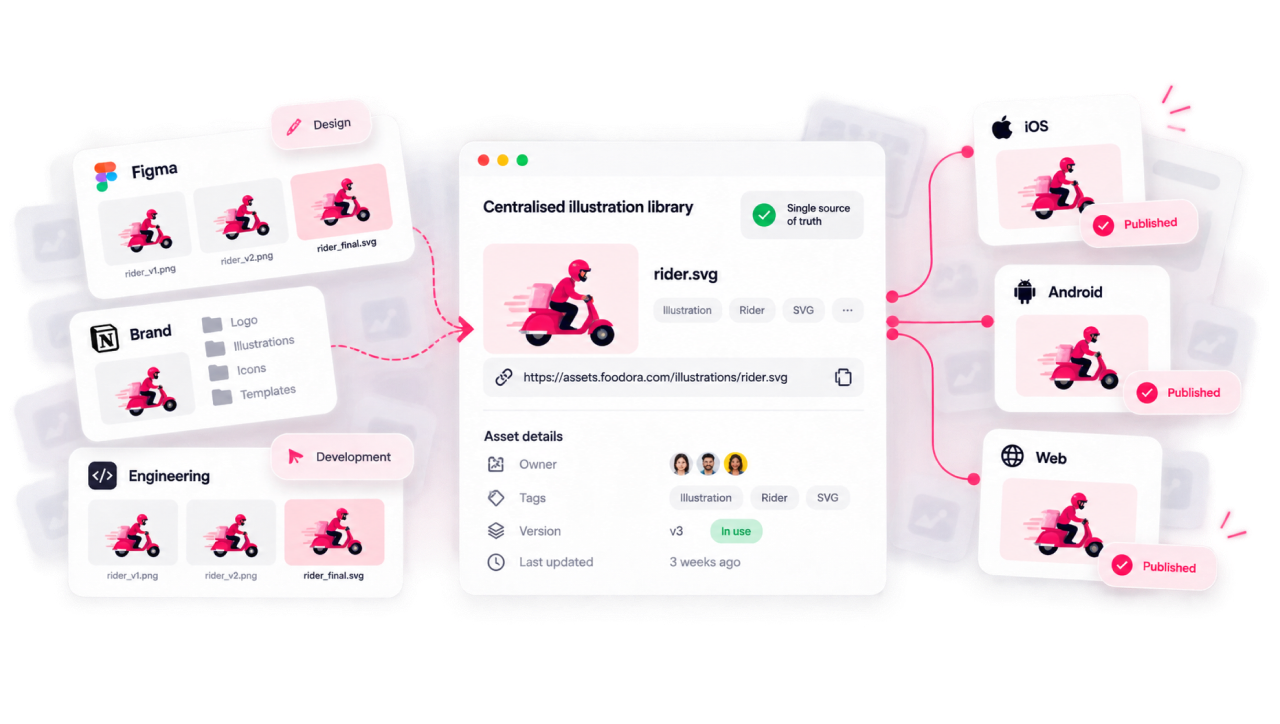
The workflow connected Brand, Design and Engineering around the same asset lifecycle: illustrations could be created or updated in the shared Figma library, reviewed with the relevant teams, published through the image service, and consumed by engineering through their URLs.
Naming, tagging and ownership became part of the system rather than knowledge held by individual teams.
One source of truth, distributed across products
Centralising the illustration library changed asset management from a platform-specific task into a shared system. Figma provided one place for designers to manage the illustration set, while DHIS allowed products to consume those assets remotely.
That reduced duplicated maintenance, made cross-platform consistency easier to protect and made future brand changes or migrations easier to manage.
Moving illustrations out of the application bundles was also expected to reduce app size by approximately 10–15 MB.